

Fintech PR Unfiltered
Daniel Lowther
SVP and Head of Fintech, The Hoffman Agency
Should the rise of influencers and AI content change your PR strategy? And how can you launch a new firm at Money20/20 with mere days to prep? Daniel Lowther shares his thoughts and stories.


Public relations is one of fintech's most misunderstood disciplines. In Fintech PR Unfiltered, the best PRs in the business talk candidly about the joys, stresses, and myths that surround fintech publicity.
Think you know PR? It may be time to think again.
Founders can understandably gravitate towards "Did we get into the FT?" But the question is, what does this do for your business? I like a big media hit as much as anyone, but 50 pieces of coverage that means you come up top on discovery and comparison LLM prompts is likely more valuable than a paragraph in the pink paper.
Who are you?
Daniel Lowther, SVP and Head of Fintech, The Hoffman Agency
Who are your key clients?
Arf, Enfuce, NatWest Boxed, Mambu, Orbital
Describe your PR firm in one sentence. What makes it different?
Hoffman combines deep fintech expertise and relationships with proprietary insight into how buyers (both human and artificial) behave so brands can influence how purchasing decisions are made.
Who is your typical client?
Ambitious B2B fintech companies often (but not always) in payments, banking, DeFi, regtech and CFO tech. Typically they are scale-ups, challengers and established leaders. We work best with firms willing to be bold in a sea of sameness, whether they need to break through, communicate consistently across multiple markets, position ahead of a capital event or, simply, sell more stuff.
Fintech is a crowded and noisy sector. How can founders cut through when everyone claims to be "revolutionising" something?
Access or insight.
Either give influencers access to something they genuinely want, whether that's interesting data, customers, partners or individuals, or give them genuine insight: a point of view that challenges conventional wisdom, contributes to a live industry debate or connects what the company knows to a bigger economic or societal issue.
The mistake founders make is starting with what they want to say. A good story sits at the intersection of what the company can credibly contribute, what the influence and their audience care about, and what's happening in the world at that moment.
In a sector where everyone is claiming to be revolutionising, disrupting or transforming something, saying you're different doesn't work – you need to show it.
What's the single biggest misconception founders have about what PR actually does?
That PR is simply about awareness. About getting in the media. About making noise. And that it has an on/off button.
Especially in fintech, PR is about reputation, trust and credibility. It supports sales and growth. It differentiates companies from their competitors. And ahead of a fundraise, capital event or exit, the reputation they have built impacts their valuation.
There are hard-nosed commercial reasons too. In our own research, half of financial technology buyers told us brand perception is either the main factor or the only factor they consider when making a purchase. Earned media is a key part of building that brand. Companies can tell people they're brilliant. But it's more powerful when credible third parties tell them too.
AI adds another dimension. Increasingly, buyers are asking LLMs to help them discover, compare and evaluate companies. Those answers are shaped by information from across the web, especially third-party editorial sources.
PR therefore has a much bigger job than generating column inches. It helps shape what buyers, journalists, investors and, increasingly, machines understand and believe about a business.
Which types of founder personalities are easiest/hardest to work with?
The easiest are the curious founders. They know their business inside out, but they're interested in how the outside world sees it. They make time, share what they know, prioritise media relationships and are open to being challenged. They understand that the more they put into the partnership, the more they get out of it.
The hardest are the 'broadcast' founders. They see PR as a commodity and the agency as a route to getting their message into the media. They don't invest the time to develop stories or relationships, can be guarded with information and resist advice that challenges the story they already want to tell.
The irony is that the best PR often comes from founders who are prepared to talk less about what they want to say and think more about what other people might actually want to hear.
How do you measure success in your work? Does this differ from the metrics that founders often rely upon?
We measure success against what the business is actually trying to achieve. That might be breaking into a new market, building credibility in a new category, supporting sales, attracting talent or positioning ahead of a capital event. From there, we work backwards to the communications outcomes and metrics that matter.
Broadly, we look at three things: are we growing visibility, are we strengthening credibility, and is that contributing to commercial impact? Coverage and share of voice matter, but so do who is talking about the company, what they're saying, whether the right messages are landing and, increasingly, whether that authority carries through into how LLMs understand and recommend the brand.
Founders can understandably gravitate towards "Did we get into the FT?" But the question is, what does this do for your business? I like a big media hit as much as anyone, but 50 pieces of coverage that means you come up top on discovery and comparison LLM prompts is likely more valuable than a paragraph in the pink paper.
Pitching to journalists can be tough. What should founders know when trying to get coverage?
It takes time to build trust and cut through, and the best relationships start with mutual value. Founders often approach journalists when they want something: a launch covered, an interview or a profile.
The best way to cut through is often to be selfless. A friend has just joined a major fintech company; would an introduction be useful? I'm on the steering committee of an industry association; would it help to know what's on the agenda? I've seen some interesting data on a story you're covering; can I share it?
Do that consistently and they get to know the founder as someone who understands their world and can be useful to them. Then, when the founder does have a story to tell, there's already a relationship there.
What's the most common mistake a founder makes in their first media interview? And how do you fix it?
Talking about themselves too much.
Founders naturally want to talk about their company, product and why it's brilliant. That can quickly turn into hyperbole, jargon and sales messaging. The journalist is usually much more interested in what they know.
We fix it through media training and good preparation before every interview. Having a PR person on the call also helps guide the conversation and pick up opportunities the founder might miss.
Media is changing. How is your budget allocation shifting?
Media is narrowing and expanding at the same time.
There are fewer traditional publications and fewer journalists, with less time and a higher threshold for what constitutes a story. At the same time, our definition of media has expanded enormously. Podcasts have become an important medium; Substacks and newsletters are growing in influence for niche audiences. In some sectors, the quintessential Substack can matter more than the leading trade publication.
So I don't think the answer is necessarily spending less on media relations. Good media relations takes at least as much work as it used to, but that work is changing.
Content is now incredibly easy to generate. Good content isn't. Anyone can use an LLM to produce a competent pitch or opinion, which puts a premium on the things that actually make a story interesting: original insight, anecdotes, specific examples, proprietary evidence and genuinely contrarian views.
We're also investing more time in understanding who actually influences an audience. Finding the right journalist, podcaster, newsletter writer or other influencer, understanding what they care about and tailoring an approach accordingly is much more fragmented and labour intensive than working through a traditional media list.
So the shift for me is towards more original thinking and more precise influence. Less generic content and blanket outreach.
What's been your biggest win in PR?
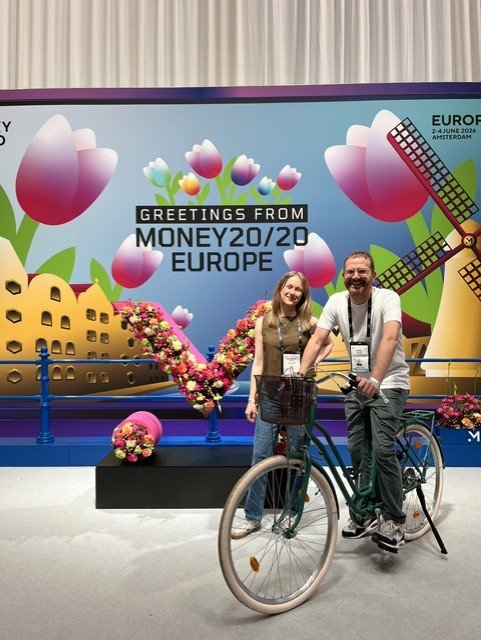
Goodness me, Ian, there have been so many 🙂. If you're to really force me to, it was launching a payments firm at Money20/20 Europe.
Weeks out from launch there was no messaging, no plan, no story. We created this all from scratch at speed. During one call we heard about a partnership which wasn't flagged as significant but, given the political situation at the time, was potentially dynamite.
We then anchored the launch story around this partnership, secured an exclusive with the FT, and it all dropped on the 1st day of the show.
The company and the story were the talk of the show. We had everyone from CNN to The Times calling us for comment. The client was over the moon, the company went from nowhere to everywhere, and it's probably the best day of my PR career.
Which campaign, stunt, or piece of comms work from another PR team made you think 'I wish I'd done that'?
I'm going back a bit, but Wise's early campaigns against hidden bank fees. They had people stripping off in the City, funeral processions, bathtubs and all sorts.
I remember them more than a decade later, which probably tells you everything. They took a fairly dry consumer issue, hidden FX fees, found an enemy in the banks and consistently turned it into something visual, provocative and newsworthy.
There have been slicker fintech campaigns since, but I still wish I'd been in the room when they came up with those.
What advice would you give to a fintech founder who's about to hire their first PR firm?
It's about fit. There are lots of good agencies, but most are better at some things than others. Specialism, relevant experience, capabilities and chemistry all matter. Founders should be clear about what they actually need and find an agency whose strengths match that.
I'd also expect to be challenged and challenge the agency in return. Show me recent results for companies like mine. What would you do if we faced this situation? If we're sitting here in 12 months and this has been successful, what will you have achieved?
And don't underestimate chemistry. You're going to spend a lot of time together, often when things aren't going to plan. You need an agency team you trust enough to listen to when they tell you something you don't necessarily want to hear.
Want to feature in Fintech PR Unfiltered? Get in touch at info@ianhorne.media, and we'll take it from there. Features are not endorsements unless stated.